Best Denver Souvenirs: 10 Picks Locals Buy
The best Denver souvenirs ranked, LoDo tourist tat versus lived-in Denver, why the skyline beats Coors merch, Stetson hats, and ski-shop kitsch.
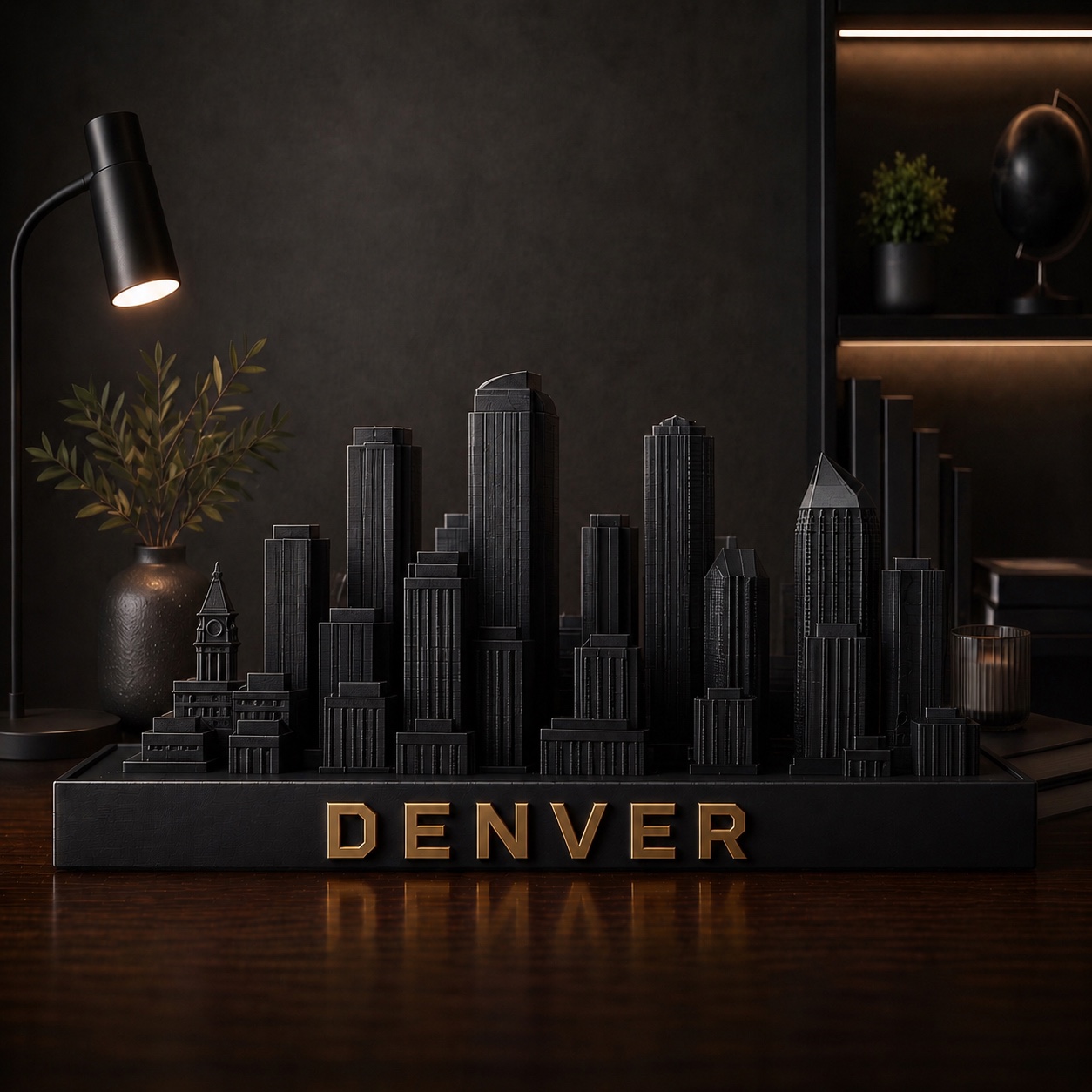
Best Denver Souvenirs: What to Bring Home Beyond Stetson Tat
The best Denver souvenirs are not in the LoDo gift shops on Sixteenth Street. They are not the Stetson cowboy hat sold to a tourist who has never been on a horse, the mountain-shaped shot glass with "Mile High Club" stamped across the base in a font that was supposed to be cheeky in 2003, the snow globe of the Rockies with a tiny resin tower in the middle, the keychain shaped like a ski lift, the cheap Coors Banquet t-shirt with the date of yesterday's Coors Field game already faded into the cotton. The LoDo souvenir economy from Union Station east to Coors Field has built itself around the airport-stopover traveler, the long-weekend bachelor party in town for forty hours, the family on the second day of a Rocky Mountain National Park trip looking for something to take home before the drive back to the rental car return.
This guide is for the other Denver. The Denver the Cherry Creek attorney moved into for a partner role. The Denver the Lockheed Martin engineer drives home through after a ten-hour shift in Littleton. The Denver the Boulder transplant chose over staying in the Bay Area another year. The Denver the RiNo gallery owner is keeping the doors open in despite the rising rents. The best Denver souvenirs are the objects a serious adult keeps on a shelf for fifteen years, the ones the Denver-to-Bozeman expat sends back to their parents in Connecticut, the ones that read as Denver from across a room without needing a tin star and a fake six-shooter to announce themselves.
We make a Denver skyline sculpture, so we are not pretending neutrality. We will name our piece and we will name the nine others that compete with it. The skyline wins, and the runners up are good in their own ways. The point of this guide is to lay out the field honestly so you can choose well.
The Two Denvers
Almost every American city has a tourist version and a resident version. Denver's gap is unusually structured because the tourist version concentrates around two arrival points and the resident version lives entirely outside them.
Airport-stopover Denver is the souvenir corridor that begins inside Denver International Airport itself, twenty-five miles northeast of downtown. The DIA terminal shops sell roughly the same product mix as every other regional airport in the Mountain West, calibrated to a connecting passenger with ninety minutes between flights and a guilt obligation back home. Coors paraphernalia in five colorways. Small bottles of Stranahan's that the airport sells as a gift kit. Mountain-themed everything. Plastic snow globes. Plush moose. T-shirts that say "Denver" in the font airports have been using since 1992. Outside the airport, the tourist economy continues down Sixteenth Street Mall, through the LoDo blocks around Union Station, and out to Coors Field on game days, where the Coors-branded merchandise reaches industrial volumes that the rest of the country only sees in the Anheuser-Busch corridor of St. Louis.
Lived-in Denver is everywhere else and it is large. It is Cherry Creek with the boutiques along East Third Avenue and the gallery walks. It is RiNo, the warehouse district north of downtown that has reinvented itself around street art, working studios, and an indie food scene. It is the Highlands across the river with the bungalows and the West Highland family bakeries and the LoHi restaurants. It is Wash Park on a Saturday morning. It is Capitol Hill with the old apartment buildings and the Cheesman Park residents walking dogs. It is Stapleton turned Central Park, the master-planned neighborhood on the old airport grounds. It is the Tech Center down south where the Lockheed and Raytheon and Ball Aerospace contractors actually live. It is Boulder forty-five minutes northwest where roughly a third of the working population's social and professional lives happen. Lived-in Denver does not own a Stetson cowboy hat unless it is an actual working hat and does not want one as a souvenir.
These two Denvers share a downtown grid and a name. They do not share a souvenir aisle.
LoDo Tat Versus Lived-In Souvenirs
The tourist souvenirs are easy to list. Stetson cowboy hats in white, black, and the toddler-friendly size. Mountain-shaped shot glasses in clear and frosted glass. Snow globes with the Rockies in resin and white plastic flakes. Coors Banquet t-shirts with the gold ribbon logo. Coors Light hats. Coors-branded everything in the Coors Field team store. Cheap acoustic guitar miniatures with Colorado state flag stickers. Foam Broncos hands. Keychains shaped like ski lifts. Magnets of the State Capitol's gold dome. "Mile High Club" innuendo merchandise. T-shirts with cartoon marijuana leaves that started showing up in souvenir windows in 2014 and have never quite gone away. Resin replicas of Pikes Peak that sit on a shelf for two months before getting boxed.
These objects work for their function. The function is to fill a tote bag with five or six low-priced items, deliver them to coworkers on Monday morning, and prove the trip happened. The objects are not built to outlast the delivery moment. They are built to weigh just enough in the bag at the register near Union Station for the buyer to feel they got their money's worth.
The lived-in souvenirs are a smaller and more interesting category. A signed first edition from the Tattered Cover Book Store, Denver's literary institution since 1971, where Joyce Maynard and Erik Larson and David Mas Masumoto and the long bench of Western and American writers have signed for the better part of fifty years. An archival print from the Denver Art Museum store, particularly from the Frederic Remington Western collection. A Topo Designs Mountain Pack or Klettersack from the Denver-made bag company. A bottle of Stranahan's Colorado Whiskey, the first legal distillery in Colorado after Prohibition. A vintage Colorado-themed letterpress print from Boone Mountain Sports' archive. A small ceramic or wood piece from Modern Nomad Furniture's vendor floor. A signed RiNo Wall Project print of one of the murals on Larimer Street. A vintage Coors Field opening-season pennant from a serious memorabilia dealer, not a new Coors-branded item. A Brother Vellies leather piece for the design-aware recipient. A 3D Denver skyline with Republic Plaza, Wells Fargo Center, 1801 California, and the Daniels and Fisher Tower, rendered in matte black with brushed gold lettering.
These objects are not louder than the tourist ones. They are quieter. The recipient who unwraps a Tattered Cover first edition, a Stranahan's bottle, a Topo Designs bag, or a hand-finished Denver skyline does not get the immediate hit of cowboy hat and Coors red. They get something more durable. They get a piece of the Denver residents actually live in.
This guide ranks the ten best Denver souvenirs by that standard. Airport and LoDo souvenirs are not on the list. They have their own list and that list is sold at gate B26 and on every block of the Sixteenth Street Mall.
The Ten Best Denver Souvenirs Ranked
1. The Hand-Printed Denver Skyline by City Skyline Decor
Bias acknowledged, and we will spend the rest of the guide earning it.
The Denver skyline is a 3D-printed sculpture in matte black with brushed gold lettering on the base reading DENVER. Three sizes. The Small is six inches across at twenty-nine dollars. The Medium is seven and a half inches at forty-nine. The Large is nine inches at sixty-nine. Each piece is hand-finished in our US workshop and ships within three to five business days.
The buildings on the model are the Denver silhouette residents see daily from any I-25 approach, from any Highlands or Berkeley overlook, from the bike path along the South Platte River. Republic Plaza at the center, the dark glass tower completed in 1984 at 717 feet that has been the tallest building in Colorado for more than four decades, the silhouette every Denver resident draws on a napkin when asked to draw the city. Wells Fargo Center next to it, the postmodern shaft completed in 1983 with the curved roof that earned it the universal local nickname of the cash register building, a Philip Johnson and John Burgee design that defined the look of 1980s corporate Denver. 1801 California, the granite-and-glass tower completed in 1982, the AT&T era anchor that filled out the rest of the downtown silhouette during the oil-and-gas boom Denver was running on. The Daniels and Fisher Tower from 1910, the twenty-story Beaux-Arts campanile modeled on the Campanile di San Marco in Venice, for forty years the tallest building west of the Mississippi, now embedded into the southern edge of the downtown grid and still owned by a small group of historic preservation partners. The full reasoning on each tower is in our Denver skyline buildings guide.
The reason this object ranks first is structural and we will defend it later in the guide. The short version: this is the only Denver artifact that holds 1910 and 1984 and 2016 in one silhouette, the only one that records cross-era continuity rather than collapsing Denver into a single decade. It lives on a shelf forever. It does not melt in checked luggage. It does not need a frame. It is gift-ready out of the box.
2. Tattered Cover Book Store Signed First Editions
Tattered Cover is the closest thing Denver has to a literary institution that competes with the skyline in the resident register. It deserves a careful section.
Tattered Cover opened in 1971 in Cherry Creek as a small independent bookstore, and over the next five decades it became one of the most important independent bookstores in the American West. The Cherry Creek original was for many years the destination, the LoDo Union Station location served as the downtown anchor, and the Colfax Avenue location was the East Denver neighborhood store. The store has weathered ownership transitions, the Borders era, the Amazon era, the pandemic era, and is still open and still hosting authors. The signing program is substantial. Joyce Maynard. Erik Larson. David Mas Masumoto. Pam Houston. Kent Haruf during his lifetime. The bench of Western American writers, Mountain West naturalists, food writers, and serious nonfiction has read at Tattered Cover for the better part of fifty years.
A signed Tattered Cover first edition is a serious literary souvenir for the recipient who reads. Price band runs from about twenty-five dollars for a recent signed paperback to several hundred for the older signed editions. The selection rotates with the reading schedule, and the staff can usually point a serious buyer to the case that holds the signed inventory rather than to the front-of-store new release table.
The catch is recipient specificity. The recipient has to read, and the book has to match their reading taste. For the right recipient, this is one of the strongest options on the list. For the general recipient, the book sits unread on a shelf, which is a different kind of return than the skyline produces.
3. Denver Art Museum Archival Prints (Handle Cultural Pieces With Respect)
The Denver Art Museum on West Fourteenth Avenue Parkway is the principal museum of the Rocky Mountain region and one of the most architecturally distinctive in the country, with the Frederic Hamilton building by Daniel Libeskind sharing the campus with the original Gio Ponti Castle Tower. The museum's collections are genuinely deep. The Petrie Institute of Western American Art holds one of the most significant Frederic Remington and Charles Russell collections in the country. The Native Arts collection is among the most extensive in any American museum.
The gift shop is a serious museum retail floor. Archival prints from the Western American Art collection, particularly the Remingtons, are available in framed and unframed formats and read as Denver in a register that no other souvenir occupies. A framed Remington print in another city's living room reads as the American West rendered by the artist who defined how the country saw the West for a hundred years. Price band runs from about forty dollars for a small print to several hundred for the limited editions.
The Native Arts collection requires a different conversation. The objects in the museum's collection are sacred and cultural artifacts of Indigenous nations whose relationship to the American West is foundational and complicated. The museum's gift shop sells licensed reproductions, books, and educational prints that have been produced in consultation with the source communities. These items are appropriate gifts when chosen with intention and with respect for the work the museum has done to handle the collection responsibly. They are not appropriate as casual souvenirs picked up because the colors look nice. If you are choosing a Native Arts item from the DAM shop, choose the documented and licensed reproductions, read the materials about the source community, and treat the gift as the cultural object it is. The Western American Art prints, particularly the Remingtons, are the simpler choice for the general gift register.
4. Topo Designs Bags and Outdoor Goods, Made in Denver
Topo Designs deserves its own careful section because it competes most directly with the skyline as a "Denver artifact an adult uses or displays."
Topo Designs was founded in 2008 by Mark and Jedd Hasenkopf in Fort Collins and moved its operations to Denver, where it has become the Patagonia of the Mountain West in roughly fifteen years. The brand makes outdoor and travel bags, jackets, technical apparel, and accessories, with a substantial portion of its production still manufactured in Colorado. The Mountain Pack, the Klettersack, the Daypack Classic, the Mountain Briefcase, and the Trip Pack are the recognizable silhouettes you see on the shoulders of Denver residents and Denver visitors who are paying attention. The flagship store in the Lower Highlands neighborhood is the destination for the visitor who wants the brand at the source.
A Topo Designs bag is a Denver object in a wearable and functional register that almost no other Denver artifact occupies. The recipient who unwraps a Mountain Pack uses it for the next decade. It is the bag they take to work, on trips, on weekend hikes in the foothills, on long flights. Price band runs from about sixty dollars for the smaller accessories to several hundred for the technical jackets.
The honest comparison with the skyline is one of function. Topo is wearable and useful and lives on a shoulder or a hook by the door. The skyline is sculptural and lives on a shelf or a mantel. They occupy different niches in the recipient's life. For the recipient who actively uses outdoor gear, the Topo bag is sometimes the better gift. For the recipient who works at a desk and lives in an apartment, the skyline is the better gift. We will return to this comparison later because it is the closest call on this list.
5. Stranahan's Colorado Whiskey
Stranahan's is the closest thing Denver has to a flagship spirit, the first legal distillery in Colorado after Prohibition and the longest-running single malt operation in the state. The distillery was founded in 2004 in southwest Denver by George Stranahan and Jess Graber, and the original mash bill was a 100 percent barley single malt aged in new American oak. The brand survived ownership transitions through Proximo Spirits and has continued operating out of Denver with the same approach.
A bottle of Stranahan's Original at the standard 47 percent ABV runs about sixty dollars retail. The Diamond Peak expression, the Sherry Cask, and the Snowflake limited release run higher, with Snowflake bottles trading on the secondary market for several hundred dollars. The brand also runs distillery tours that conclude with a tasting room purchase.
The honest assessment is that Stranahan's fails the durability test for the same reason all liquor fails the durability test. The bottle gets opened, the whiskey gets drunk, and the souvenir becomes a memory. We include it on the list anyway because for the specific recipient who appreciates American single malt, a bottle of Stranahan's is one of the few Denver perishables that carries real local provenance. Pair the bottle with the skyline. The whiskey is the welcome. The skyline is the permanent record.
6. Boone Mountain Sports Vintage Colorado Prints
Boone Mountain Sports in the Boulder-Denver corridor has built itself around outdoor sporting goods, but the shop's archive of vintage Colorado-themed prints, ski posters, climbing route maps, and Rocky Mountain National Park ephemera is one of the underrated Denver souvenir categories. The shop sources from collectors, estate sales, and original commercial archives, and the wall of vintage prints includes 1930s Colorado ski resort promotional posters, 1950s mountaineering route maps, and 1960s and 1970s national park advertising.
A framed vintage Aspen or Loveland ski poster from the 1940s reads as Colorado in a register that the new merchandise never touches. The piece carries real twentieth-century commercial art credentials and lives on the wall of the recipient who appreciates the visual history of the Mountain West. Price band runs from about fifty dollars for smaller reproduction prints to several hundred for the original archive pieces in good condition.
The catch is wall space and aesthetic alignment. The vintage prints are graphic and bold and read as 1940s to 1970s commercial illustration. They work in a recipient's home if the home already leans toward graphic art or mid-century aesthetics. They feel out of place in a contemporary minimalist apartment. Match the recipient's existing aesthetic before committing.
7. Modern Nomad Furniture Small Pieces
Modern Nomad is the vendor-marketplace furniture store on Tennyson Street in the Berkeley neighborhood, with a sister location in the Highlands. The store curates more than one hundred independent vendors selling vintage furniture, mid-century pieces, reclaimed wood items, handmade ceramics, and small decorative objects. The footprint is large enough that the buyer can spend two hours on the floor and still discover new pieces.
The small-piece souvenirs from Modern Nomad are the right register. A reclaimed wood cutting board from a Colorado workshop. A hand-thrown ceramic vessel from a Front Range potter. A small mid-century brass piece from a vintage vendor. A leather catchall from a Denver craftsperson. These are the Denver objects that read as the city's current craft and curation register without screaming Denver at the recipient.
The catch is that Modern Nomad is a curation rather than a brand. The buyer has to walk the floor and find the piece that suits the recipient. There is no consistent product line to recommend. For the buyer who is in Denver and has time to shop, this is one of the best resident-register destinations. For the gift buyer in another city, the shop is harder to use, which is part of why we rank it seventh.
8. RiNo Wall Project Street Art Prints
The RiNo neighborhood, the warehouse district immediately north of downtown along Larimer and Walnut Streets, has built itself around street art over the last fifteen years. The RiNo Art District commissions, sanctions, and protects a rotating set of murals on the warehouse walls, and many of the working muralists sell signed and numbered prints of their work through their own studios, through the RiNo Art Park, and through the Denver Walls program archives.
A signed RiNo Wall Project print in another city's living room reads as Denver's current creative class in a register that the museum prints do not occupy. The work is contemporary, often confrontational, often by working artists who are still in the early stages of their careers. Price band runs from about thirty dollars for a small unsigned print to several hundred for the signed limited editions by the more established muralists.
The catch is the recipient's aesthetic. Street art reads modern and graphic and is not for every room. For the right recipient, the design-aware adult with contemporary taste, a signed RiNo print is one of the most distinctive Denver objects you can give. For the traditional room, it lands wrong.
9. Vintage Coors Field Memorabilia, Not New Coors Merch
The distinction matters and we want to be clear about it.
New Coors-branded merchandise is the largest single tourist souvenir category in Denver. The Coors Field team store moves industrial volumes of new caps, jerseys, t-shirts, and licensed product to game-day visitors. None of this is on our list. The product is calibrated to the day-of purchase, the licensing fee is built into the price, and the souvenir is a brand-new branded item rather than a piece of Denver history.
Vintage Coors Field memorabilia is a different category. The 1995 inaugural-season pennant, in good condition, sourced from a serious memorabilia dealer rather than from a souvenir shop. The 1995 first-year Rockies game program from a specific game with documented provenance. The 1990s pre-Coors-Field-era Mile High Stadium baseball ephemera from the years before the new ballpark opened. The 2007 World Series pennant. These items carry real Denver baseball history and read as the kind of souvenir that the serious sports fan recognizes as authentic.
Price band runs from about twenty dollars for a vintage pennant to several hundred for the rarer signed pieces. The catch is the same as any sports memorabilia. The recipient has to know baseball, and the recipient has to know Denver baseball specifically. For the right recipient, a 1995 inaugural-season pennant is one of the strongest Denver objects you can frame. For the general recipient, the skyline reads broader.
10. Native Roots Cannabis Dispensary Branded Items (Gateway Gift Only)
Denver was the first major United States metropolitan market for legal recreational cannabis, which opened on January 1, 2014, when Colorado's Amendment 64 implementation went live. Native Roots was among the original dispensary operators in the Denver market and has expanded to a multi-state footprint while keeping its Colorado headquarters. The brand is significant to the Denver cannabis economy in roughly the way that early Starbucks was significant to the Seattle coffee economy.
Branded merchandise from Native Roots and its peer original Denver dispensaries, t-shirts, hats, glassware, and accessories from the early years, occupies a specific Denver register. The merchandise reads as the recipient who recognizes that Denver pioneered legal weed retail in this country and that the original operators built an entire industry's playbook here.
The honest caveats are important. Cannabis-related souvenirs are appropriate for some recipients and not for others. The cannabis industry executive, the cannabis attorney, the cannabis investor, the cannabis-curious recipient who has visited Denver specifically for the dispensary culture, will receive a Native Roots cap or a vintage 2014-era branded item as a meaningful Denver artifact. The general recipient, a colleague's spouse, a friend's parent, a corporate gift, will receive it as a category-confusion problem. Choose the recipient carefully. The skyline travels everywhere. The cannabis-branded merchandise does not.
Why the Skyline Outranks the Field
We promised an argument. Here it is.
The other nine items are real Denver souvenirs. Several of them are excellent for specific recipients. A Tattered Cover signed first edition is the right gift for the serious reader. A Topo Designs Mountain Pack is the right gift for the recipient who lives outdoors. A bottle of Stranahan's is the right gift for the single-malt drinker. A Frederic Remington print is the right gift for the recipient with serious wall space and a Western American art interest.
None of these objects does what the skyline does, which is hold every era of Denver in one silhouette without privileging any of them.
Look at the buildings on the model again. The Daniels and Fisher Tower was completed in 1910. It is the Beaux-Arts campanile that anchored Denver's first downtown, the era when the city was the commercial capital of the Rocky Mountain mining and ranching economy and the tower represented the ambitions of a Denver that was still pitching itself as the Chicago of the West. Republic Plaza was completed in 1984. It represents the apex of the 1980s oil-and-gas boom that defined corporate Denver and brought the city its current downtown skyline in roughly an eight-year window. Wells Fargo Center, the cash register building, was completed in 1983. It is the Philip Johnson and John Burgee postmodern statement that came in alongside Republic Plaza in the same boom. 1801 California, completed in 1982, fills out the same era. The current era of Denver, the post-2010 residential and technology growth, has added a series of slim glass towers in the LoDo corridor and the Union Station rail yard area that are now part of the silhouette as well.
The skyline holds all of these on one base. It does not require the buyer to choose between Denver's eras. It does not say "Denver is the mining city" or "Denver is the 1980s oil-and-gas city" or "Denver is the 2010s aerospace and technology city." It says Denver is the silhouette these buildings make together, which is the only artifact that is actually as old as Denver is and as new as Denver is.
This matters because most Denver souvenirs collapse the city into a single era. The Stetson cowboy hat collapses Denver into the late-nineteenth-century cattle drive that the city barely participated in. The Coors merchandise collapses Denver into the Coors family brewery in Golden. The cannabis merch collapses Denver into post-2014 legal weed. The Stranahan's bottle collapses Denver into a single distillery. The skyline does not collapse Denver into any era. It carries 1910 and 1984 and 2016 on the same shelf in the same silhouette with the same authority.
The skyline is also the only object on this list that does not depend on any single business surviving. Tattered Cover has weathered ownership transitions and is operating, but bookselling is a hard business and the future of any independent retailer is uncertain. Topo Designs is operating well, but the brand could be acquired or its manufacturing footprint could shift. Stranahan's was acquired by Proximo and could change hands again. The cannabis industry in Colorado is consolidating and the original operators are not all going to survive. The skyline does not depend on any of this. The buildings on the model are owned by an array of REITs, banks, and historic-preservation partnerships, and they will be there in 2040.
The skyline is hand-finished in our US workshop and ships in three to five business days. It does not melt in checked luggage. It does not need a frame. The Small fits in a 22-inch carry-on. It is gift-ready out of the box.
For more on the broader argument, see our Denver skyline gift ideas piece and our best skyline gifts guide.
Three Buyer Profiles
Different buyers, different recipients, different sizes. The patterns we see across our Denver orders, in rough order of frequency.
The Airport-Stopover Tourist Bringing Something Home
The Small at twenty-nine dollars. The traveler had a four-hour DIA layover, walked the concourses, looked at the Coors merch wall, considered the Stranahan's gift kit at the airport liquor counter, and decided not to. Or the visitor spent two nights in Denver, did one Red Rocks evening show, ate one dinner at a LoDo restaurant, drove out to Boulder for an afternoon. Somewhere on day two, between the Stetson display and the snow globe wall, the tourist realized that none of these objects was going to survive the flight home as a real souvenir.
The Small at six inches fits in a 22-inch carry-on without taking meaningful space. It survives the flight in the overhead bin. It sits on a desk back home for the next decade. Five years later, when the photos on the phone are buried under fifty thousand other photos and the cowboy hat is at Goodwill, the Small is still on the desk. It is the trip-memory marker that the trip was supposed to produce.
The Bay Area, Austin, or East Coast Transplant Sending Back to Family Out of State
The Medium at forty-nine dollars. This is by volume our largest Denver buyer category. The transplant has been in Denver for two or four or eight years. They came from the Bay Area, from Austin, from Boston, from New York, from Chicago, from the Pacific Northwest. They came for a tech offer, for a healthcare job at HealthONE or UCHealth, for an aerospace role at Lockheed or Ball or ULA, for graduate school at the University of Colorado, for the simple desire to live somewhere with three hundred days of sun and a mountain backdrop. Their parents back wherever the original family is have visited Denver once and are still trying to understand what their adult child is doing in Colorado.
The Medium at seven and a half inches sits on the parents' shelf in California or Connecticut or Illinois and tells them what their child sees from the apartment window in Wash Park or the LoHi rental. It reads as a real piece on a console table, not a desk toy. Republic Plaza anchors the silhouette, the Daniels and Fisher Tower carries the 1910 history that tells the parents the city has been there longer than the boom they have heard about, and the model reads as the modern downtown the child chose. The Medium is also the right size for the corporate gift to a Denver client in another city.
The Longtime Denver Resident or Aerospace Executive at Retirement
The Large at sixty-nine dollars. The lifer who arrived in Denver in 1985 or 1992 or 2001 and never left. They watched Republic Plaza top out. They remember when the Wells Fargo Center was still being called the United Bank Tower. They watched LoDo rebuild itself after the Coors Field opening in 1995 turned the warehouse district into a destination. They were here for all of it. Or the aerospace executive retiring from a thirty-year career at Lockheed Martin in Littleton, Ball Aerospace in Boulder, ULA in Centennial, or Sierra Nevada Corporation in Louisville.
The Large on a mantel or a built-in bookshelf in the new retirement house in Evergreen or Niwot or the downsized condominium in Cherry Creek is the right size for that history. It is the statement piece for the working life lived in the city. The recipient knows what the piece is. The recipient does not need it explained.
What to Send the Denver-to-Bozeman or Boise or Austin Expat
A specific subcategory and a growing one. Denver exports residents in a particular pattern, and the relationship with the city is often more complicated than the relationship in most expat moves.
The Denver-to-Bozeman or Boise move is usually the climate-and-politics refugee. The longtime Denver resident who decided that the city's continued growth, the I-25 traffic, the cost of housing, the demographic and political shifts since 2018, were not what they wanted to live with anymore. They moved north to Montana or Idaho for the small-town version of the Mountain West, often with mixed feelings about leaving the city they had built a life in.
The Denver-to-Austin move is usually the no-state-income-tax or weather move. The longtime Denver resident who decided that the winter and the elevation were no longer worth the trade and that Texas's tax structure was better for their stage of life. They are often professionally successful, often defensive about the move, and often still maintain Denver business relationships.
Both groups carry the same emotional pattern. They are defensive about the departure because the move was their decision. They are usually proud of the new life because the math probably worked out. They are also frequently grieving the version of themselves who lived in Denver.
You cannot send them a souvenir that says "you should come back." That gift is a guilt trip in matte black. They will react badly to it. The relationship suffers.
You can send them a souvenir that says "the city you built something in is permanent and so are you." The Medium skyline arriving three or six months after the move is the cleanest version of this gift. They unbox it. They put it on a shelf in the Bozeman or Boise or Austin house. They do not say anything about it for a week. Then, eventually, they mention it.
The timing matters. Do not send the skyline before the move. Do not send it during the move. Do not send it the week they arrive, when everything is still in boxes. Wait three to six months. The skyline arrives and finds its place among the new things.
The Cannabis Industry Gift
Denver was the first major United States cannabis market post-legalization, with retail sales beginning January 1, 2014, when Colorado's Amendment 64 implementation went live. The Denver cannabis executive class is significant and growing. The founders of the original dispensary chains. The cannabis attorneys at the major Denver firms. The cannabis-focused private equity professionals. The cultivation operators. The cannabis-product manufacturers. The compliance and regulatory specialists. A serious industry with serious revenue.
The gift to a cannabis industry executive is its own register. We want to be responsible about this and we want to be honest. Not all cannabis-themed souvenirs are appropriate for general audiences, and the dispensary-branded merch is not the right gift for a recipient who is not in the industry. We do not recommend cannabis-leaf t-shirts or pot-themed kitsch as gifts to anyone. The skyline avoids this problem entirely.
For the cannabis industry recipient specifically, the skyline lands well for the same reason it lands well in any Denver industry. The cannabis economy was built in Denver, and the recipient's career and wealth were built in this city. The Medium skyline at forty-nine dollars on a cannabis executive's office shelf reads as the city they built an industry in. The Large at sixty-nine dollars is the right size for a milestone like a dispensary chain's tenth or fifteenth anniversary, a founder's exit, or a regulatory milestone.
The Aerospace Cohort Gift
Denver is one of the largest aerospace and defense industry centers in the United States, second only to the greater Washington DC region in concentration. Lockheed Martin's Space division in Littleton. Ball Aerospace in Boulder. United Launch Alliance in Centennial. Sierra Nevada Corporation in Louisville. Raytheon's Aurora operations. Northrop Grumman's regional footprint. The Colorado Air National Guard and Buckley Space Force Base. The University of Colorado Boulder's aerospace engineering program, one of the strongest in the country, feeds the industry.
This community is a major buyer category for us. The Lockheed senior engineer retiring after thirty years on the Atlas or Orion programs. The Ball Aerospace director wrapping a career on Hubble, JWST, or current satellite missions. The ULA program manager at a launch milestone. The Sierra Nevada executive at a Dream Chaser milestone. The retired Air Force officer at a Buckley milestone.
The skyline is the natural retirement gift, milestone gift, or program recognition gift in this community. We ship significant Medium and Large volume to Denver-metro aerospace addresses every year, particularly clustered around retirement seasons and program completion events. The Medium at forty-nine dollars is the standard mid-career or program-recognition size. The Large at sixty-nine dollars is the retirement gift, the legacy-recognition gift, the centerpiece of a retiring aerospace executive's home office for the next twenty years.
The Bay Area Refugee Specifically
A subcategory worth its own section. The post-2020 California-to-Colorado migration brought a meaningful cohort of Bay Area transplants to Denver, Boulder, and the Front Range. The reasons are familiar. The pandemic-era remote-work flexibility. The cost-of-living delta between San Francisco and Denver. The school system. The lifestyle calculation. The desire to live near actual mountains rather than near the idea of them.
These transplants carry a particular emotional pattern. They are defensive about leaving the Bay Area because they spent meaningful career capital there. They are usually proud of the Denver decision. They are also frequently watching the Bay Area's continued challenges from a distance and quietly relieved to be elsewhere.
The skyline gift to a Bay Area expat in Denver says something specific. It says I see you chose better. It does not say it loudly, and the recipient does not need to acknowledge the message. The Medium skyline on the new Denver console table is the visible proof that the move worked out. The recipient receives it as the new city's confirmation rather than as the old city's reproach.
The timing matters less than for the Denver-to-elsewhere case, because the Bay Area refugee in Denver is already settled. Any time after the move is appropriate. The first anniversary of the move is a particularly clean delivery moment. The skyline arrives, finds its place on the shelf, and stays there.
The Topo Designs Question
We have to address Topo directly because it comes up in nearly every Denver gift conversation.
Topo Designs is the only Denver souvenir that legitimately competes with the skyline as a "Denver artifact an adult uses or displays in their home." It is built in Denver. It is owned and operated by Denver people. Its production footprint is substantial in Colorado. Its flagship store in Lower Highlands is a serious retail experience. It is the closest thing Denver has to an outdoor-industry brand that has built itself into a national name while remaining locally rooted.
The honest comparison is one of function. Topo is wearable. Topo is functional. A Topo Mountain Pack lives on a hook by the door and on the recipient's shoulders for the next decade. It is the working object that ages well rather than wears out, and the recipient carries it through Colorado seasons until the canvas starts to soften in the places it has been handled most.
The skyline is sculptural. The skyline lives on a shelf. It does not get worn, it does not age in the way canvas ages, it does not carry the recipient's body memory the way a daypack does. It is the object that holds the city's silhouette in three dimensions on a mantel for the next twenty years.
They are different categories of gift and we are at peace with this. We have shipped many Denver orders where the buyer has already given the recipient a Topo bag and is now sending the skyline to live in the same room. The bag is the body's relationship to Denver. The skyline is the silhouette's relationship to Denver. Most serious Denver homes have both.
For the buyer choosing one or the other, the question is what the recipient already owns. A recipient who is already outfitted with the Topo basics needs the skyline. A recipient who works at a desk and lives in a condominium and does not actively use outdoor gear also needs the skyline. A recipient who is a working hiker, climber, or trail runner, who is missing a quality daypack, sometimes gets a better gift in the Topo bag than in the skyline. Most buyers, when they look honestly, end up at the skyline first because it works for any recipient regardless of activity level.
A Shipping Note
Denver ships smoothly. There are no special considerations. We ship from our US workshop directly to Denver addresses or to anywhere in the continental United States in three to five business days. The Small at six inches fits in a 22-inch carry-on for the tourist who wants to hand-carry the souvenir home from DIA. The Medium and Large ship to whatever destination address you provide at checkout, in a corrugated black mailer with rigid foam inserts that handle standard transit conditions without issue.
The piece is lightweight relative to its size. The Small ships at well under a pound. The Medium ships at just over a pound. The Large is the heaviest at around two pounds. The package fits in standard residential mail and apartment mailboxes for the Small and Medium sizes. The Large requires a porch or doorstep delivery.
Colorado elevation and winter shipping are not an issue for the matte finish. We have shipped extensively through Denver winters without finish damage in transit. The matte black is sealed and does not respond to the temperature or humidity ranges that shipping introduces.
Sizing for Denver Specifically
A short version of the size guide, calibrated to Denver buyer cases.
The Small at six inches and twenty-nine dollars is for the tourist. Two or three day trip, carry-on home, desk in Connecticut or Illinois or California. The Small reads as a real object at this scale, not a knickknack, and it survives a checked bag without issue.
The Medium at seven and a half inches and forty-nine dollars is for the gift to parents back wherever the original family is, the corporate gift to a Denver client, the gift to a Denver friend who just moved to Bozeman or Austin, the Bay Area transplant gift to family in California. The Medium reads from across a room and anchors a shelf without dominating it. This is the most common size we ship for Denver orders.
The Large at nine inches and sixty-nine dollars is for the statement. The Lockheed retirement piece. The Ball Aerospace mission anniversary. The cannabis-industry founder's exit. The Cherry Creek housewarming. The aerospace twenty-five-year service award. The Large is for the moment that deserves the moment.
If you are debating between sizes, go one up. The regret pattern is consistent. People who order the Medium when they were considering the Large occasionally wish they had gone Large. The reverse almost never happens.
FAQ
What is the best souvenir from Denver?
The best Denver souvenir depends on who it is for. A visitor who was here for three days wants something immediate — Little Man Ice Cream merchandise, green chile from Santiago's, a Great Divide six-pack. Someone who actually lived here wants the thing they will still have in ten years, which is usually the skyline, a Topo Designs bag, or a print of the Front Range. The dividing line is whether the object survives the move to the next city.
What Denver souvenirs are not tacky?
Anything bought from a business that existed before the tourism did. Coors merchandise from the airport is tat; a bottle from a Denver distillery is not. The test that works: would somebody who has lived in LoDo for fifteen years keep this on a shelf, or quietly put it in a drawer? Mountain-silhouette t-shirts and "Mile High" shot glasses fail it. Food, local brands, and anything that names a real place pass it.
What should I bring back from Denver for someone who moved away?
A Denver expat does not want a mountain. They can see mountains in Boise, Bozeman and Salt Lake. What they cannot get is the specific thing they left — green chile that tastes right, a Denver skyline with the Front Range behind it, a Daniels & Fisher Tower print. The homesickness is for the city, not the landscape, and souvenirs that get this wrong are the ones that end up unopened.
Is a Denver skyline a good gift?
It works best for people who lived in Denver rather than visited. The skyline is modest by American standards — Republic Plaza tops out at 714 feet — so it means little to someone who spent a long weekend here. To someone who commuted into it for six years it is immediately legible, and it reads as a place rather than a landmark.
How much should I spend on a Denver souvenir?
Under $25 for a visitor buying on the way to the airport, and the money is better spent on food or drink than on an object. For a leaving gift or a long-distance present, $50 to $80 buys something made rather than printed, and that is the band where a souvenir stops being disposable. Above $150 you are buying art, which is a different decision entirely.
The Right Denver Souvenir
The best Denver souvenirs are the ones an adult, fifteen years after the trip, the move, or the milestone, still has on display. The ones that read as Denver in the resident and modern-city register rather than the LoDo souvenir-shop register. The ones that do not melt, stain, age out, or get eaten. The ones that survive the next move.
By that standard, the list is short. A Tattered Cover signed first edition for the serious reader. A Topo Designs Mountain Pack for the recipient who lives outdoors. A bottle of Stranahan's for the single-malt drinker. A Frederic Remington print from the Denver Art Museum for the recipient with serious wall space. And the Denver skyline for most people most of the time, because it is the only Denver artifact that holds the Daniels and Fisher Tower from 1910, Republic Plaza and the Wells Fargo Center from the 1980s boom, and the current LoDo residential expansion in one silhouette on one shelf, with the Rocky Mountain backdrop standing permanently behind it whether the model shows it or not.
Three sizes. The Small at twenty-nine dollars, the Medium at forty-nine, the Large at sixty-nine. Hand-printed in the USA, matte black with brushed gold lettering, the Denver silhouette with the buildings residents and transplants and aerospace veterans and cannabis founders and Bay Area refugees and the Cherry Creek old-money families all see from any rooftop or freeway approach. The full collection of cities covers eleven other US cities for the buyer with more than one address on their gift list.
The LoDo souvenir shop will be there next time. The Stetson hat and the mountain shot glass will be there next time. The good Denver souvenir is not there. It is here.