Miami
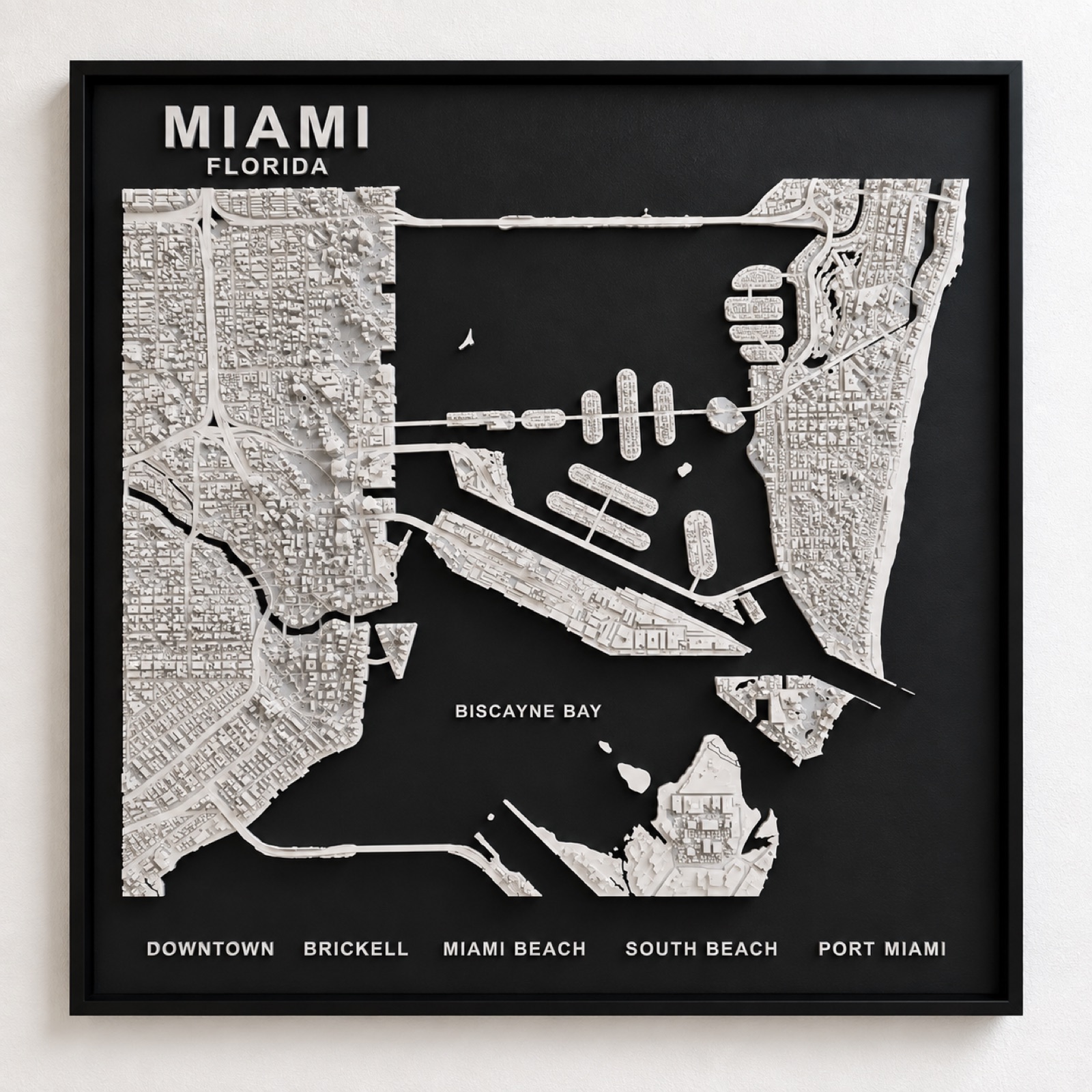
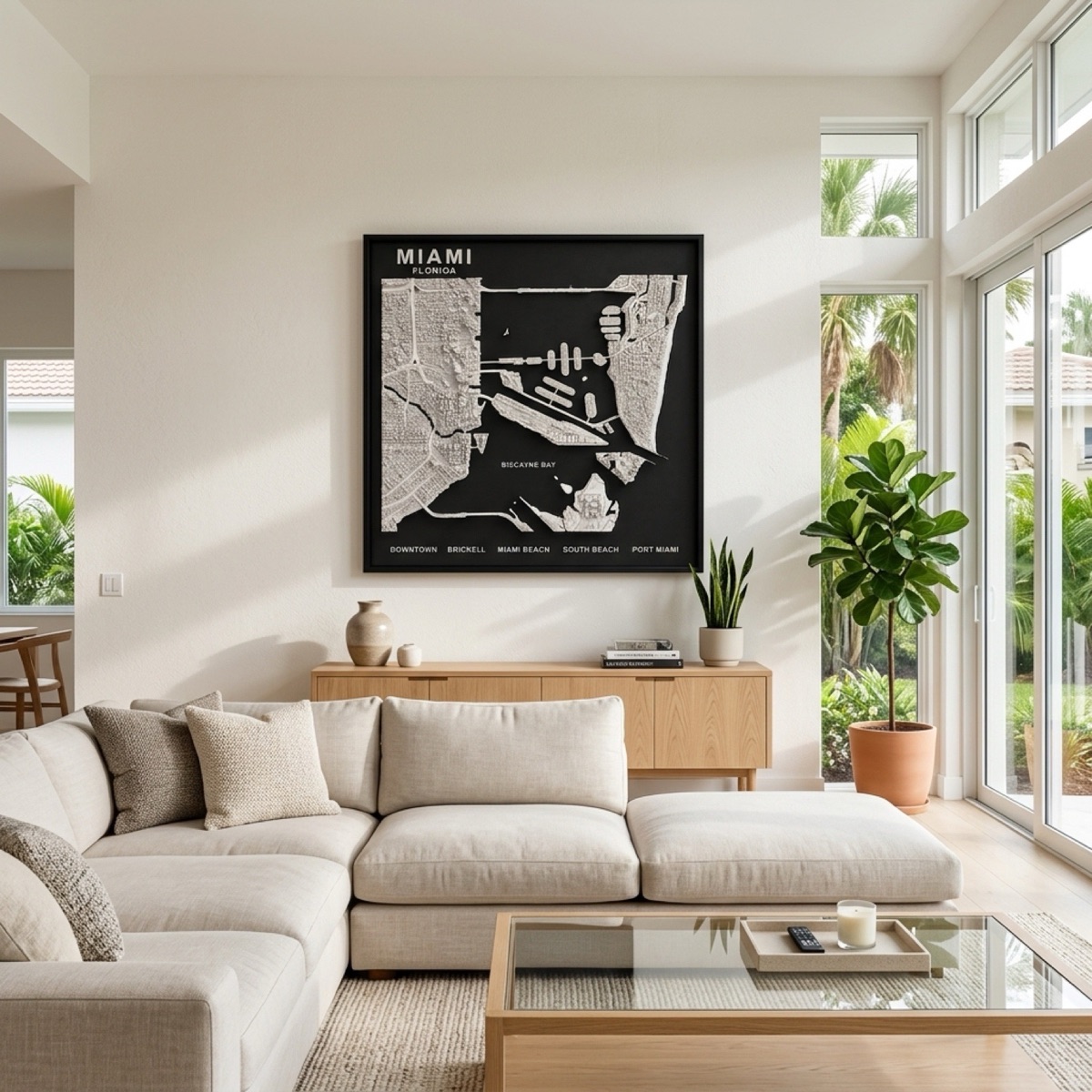
Brickell, the bay, and the barrier island.
The Brickell and Downtown towers on the mainland, the causeways reaching across Biscayne Bay, and the whole barrier island of Miami Beach — all at true relative height.
A city split in half by water
Miami is two built areas with Biscayne Bay between them, and that gap is most of the composition. On the mainland, Brickell and Downtown form one of the densest high-rise clusters in the United States. Across the water, Miami Beach sits on a barrier island — long, narrow, and lower.
The causeways are the only things crossing, and on a relief map they read as thin bridges over matte black. No other panel in this collection has a void of that size sitting in its middle, which is exactly why Miami is identifiable at a glance.
Brickell is newer than most of the skyline it belongs to
The Brickell towers are startlingly recent. Much of what gives Miami its vertical weight went up in the last twenty-five years, which is unusual for a major American skyline and gives the cluster an even, unbroken height rather than the layered look of Chicago or New York.
South Beach is the opposite: deliberately low, Art Deco, and protected. The contrast across the bay — new and tall against old and flat — is the thing the panel is really showing.
Miami also comes as a skyline sculpture.
The same city as a freestanding desk or shelf piece rather than a wall panel — three sizes, from $34.99.
See the Miami skyline →