San Francisco Skyline Wall Art: Why 3D Beats Every Flat Print
A buyer's guide to San Francisco skyline wall art in 2026 — why most flat prints and canvases go quiet, what actually makes skyline art worth hanging, and how a hand-finished 3D skyline sculpture holds a room. Sizes from $34.99 to $74.99.
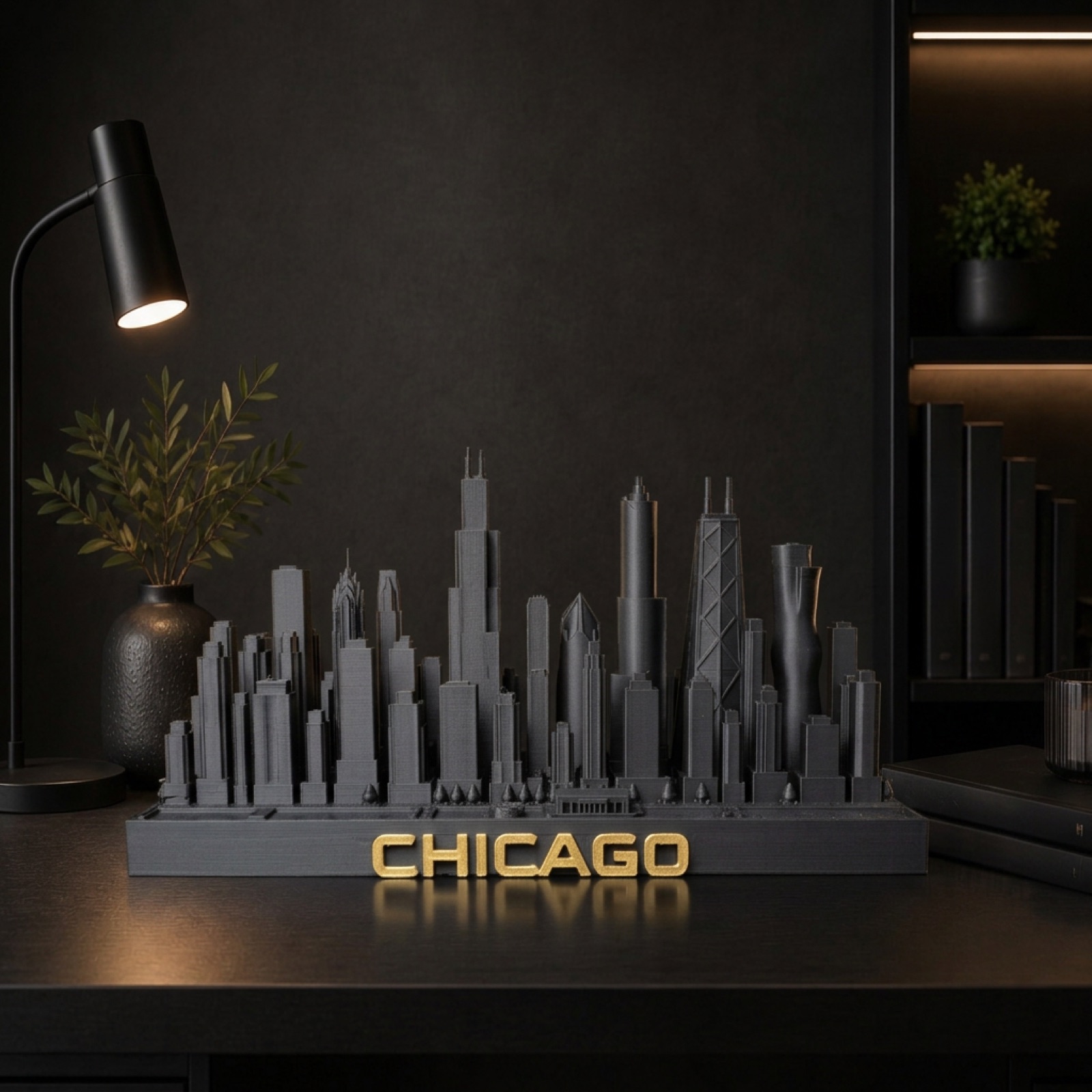
San Francisco Skyline Wall Art: Why 3D Beats Every Flat Print
We make a San Francisco skyline sculpture, so we are not neutral here. But the argument we are about to make would hold even if we made nothing at all: most San Francisco skyline wall art disappoints for the same three reasons, and the fix is not a better print. It is a different object entirely.
If you have searched for SF wall art, you have seen the field. Canvas prints of the Golden Gate Bridge in fog. Framed photographs of the downtown towers from Twin Peaks. Line-drawing posters where every building becomes a thin gold stroke. Watercolor washes of the bay at sunset with the hills glowing orange. Some of it is genuinely lovely. Almost all of it has the same quiet problem: it lies flat against the wall and asks nothing of the light.
Why Most San Francisco Wall Art Disappoints
Walk into a hundred San Francisco apartments and you will find the same three failures on the wall.
It's Generic Under the Surface
A surprising amount of "San Francisco" skyline art is not really San Francisco. It is a stock silhouette of tall rectangles with a suspension bridge bolted on and the word SAN FRANCISCO underneath. Swap the label and the downtown could be Seattle or Charlotte. The buildings that make the city legible — the tapered spire of the Transamerica Pyramid, the tall shoulders of Salesforce Tower, the crown of 555 California — get flattened into anonymous boxes. You are hanging the idea of a skyline, not your skyline.
It Reads as a Poster, Not a Piece
Flat art has a ceiling on how permanent it can feel. A print in a frame is, structurally, a piece of paper. It photographs well and it fills a blank wall, but it does not hold the eye the way a physical object does. Guests glance at it. They do not walk over and look.
It Fades Into the Room
The cruelest failure is the slow one. Canvas prints and washes tend to go quiet within a few weeks. The color settles into the wall, the composition stops surprising you, and within a month you have stopped seeing it at all. Good decor should still catch you off guard six months in, in a raking evening light you did not plan for — the kind of low, gold light San Francisco actually gets when the fog finally pulls back.
What Actually Makes Skyline Art Worth Keeping
The pieces that survive the six-month test share a few traits, and none of them is about resolution or frame quality.
They are specific — you can name the buildings. They have physical presence — they take up volume and cast a shadow. They are tied to a real place in your life — the city you grew up in, the one you left, the one where something happened. And they reward light — the way an object changes as the sun moves across it during the day is what keeps it alive on the shelf.
Flat art can nail the first trait. It struggles with the other three by definition. This is the whole case for going three-dimensional.
The 3D Skyline: What Changes When Art Leaves the Wall
Our San Francisco skyline is a 3D-printed sculpture in matte black with brushed gold lettering on the base reading SAN FRANCISCO. The Small is six inches across at twenty-nine dollars. The Medium is seven and a half inches at forty-nine. The Large is nine inches at sixty-nine. Each is hand-finished in our US workshop and ships within three to five days.
The moment skyline art becomes an object rather than an image, three things change.
It casts a shadow. Put a lamp beside it and the towers throw a second skyline across the shelf and wall. That shadow moves through the day. A print cannot do this. It is the single biggest reason a sculpture keeps its hold on a room while a poster goes quiet.
It reads from any angle. Walk past it and the buildings shift relative to each other — Salesforce Tower slides in front of the pyramid, the downtown towers step down, the composition reorganizes. A framed print looks the same from every seat in the room.
It occupies a surface, not a wall. This matters more than it sounds. A mantel, a bookshelf, a console by the door, a desk — the sculpture lives at eye level in the paths you actually walk, not up on a wall you stop noticing. It becomes part of the room's daily geometry instead of a rectangle you hung once.
There is a specific reason this works for San Francisco. This is a city defined by elevation and by light that changes hour to hour — the way the sun cuts across the downtown towers in the late afternoon, the way the fog rolls in and drops the whole skyline into silhouette. A flat print freezes one of those moments and holds it forever. A sculpture does the opposite: it takes on whatever light your room is actually in, morning sun or a single warm lamp at night, and rearranges its own shadows to match. It behaves the way the real skyline behaves. That is not a small thing for a city where locals genuinely argue about which view, from which hill, at which hour, is the best one.
The Buildings Are Real
The towers on the model are not stand-ins. Salesforce Tower with its rounded, tapering top standing over everything downtown. The Transamerica Pyramid with its unmistakable spire and flanking wings — still the shape most people draw first when they think of the city. 555 California Street, the dark granite tower that anchored the old financial-district silhouette for decades. The Millennium Tower, the slender residential high-rise that South of Market added to the profile. And Coit Tower up on Telegraph Hill, the fluted column that reads as San Francisco even though it is nothing like a skyscraper. The Golden Gate Bridge is the postcard, but the bridge is not the city — the sculpture is the skyline itself, the downtown you actually live and work under.
If you walked from the Embarcadero up through the financial district and out toward North Beach, you walked past every building on the model. That specificity is the difference between San Francisco skyline art and generic skyline art. A native will pick out their building. Someone who worked in a SoMa tower will find the Millennium without being told. That recognition is what turns a decoration into something personal.
It is worth saying what the sculpture is not. It is not a bridge on a base with a fog wash behind it. The Golden Gate is the most photographed thing in the region, which is exactly why so much San Francisco skyline decor collapses into it and stops there — the bridge does the work, and the actual city behind it goes missing. Our sculpture is the reverse. It gives you the downtown you know from the ground: the pyramid that has been the city's shorthand since the 1970s, the newer towers that changed the profile in the 2010s, and Coit Tower holding its own on the hill above them all. It is the skyline a resident carries in their head, not the postcard a visitor buys at Pier 39.
Sizing It for Your Room
The three sizes are not just price tiers — they suit different spots.
Small (6 in, $34.99) is a desk and shelf piece. It fits a bookshelf gap, a work-from-home desk, a windowsill. It is also the size most people start with when they are buying for themselves.
Medium (7.5 in, $54.99) is the everyday statement size. It holds a mantel, a console table by the entryway, or the center of a floating shelf without crowding it. If you are buying one and are not sure, buy this one. It is the size our first customers keep coming back to.
Large (9 in, $74.99) is for a room that needs an anchor. A wide mantel, a credenza in a living room, a reception desk, a conference-room shelf. It reads across a room and it photographs like a small monument.
Because it sits on a surface and lights from the side, it pairs well with the flat art you may already own. A framed Golden Gate photograph on the wall and the 3D skyline on the console below it is a stronger corner than either piece alone.
San Francisco Skyline Wall Art as a Gift
Most people who buy the skyline are not decorating a blank wall. They are buying it for someone with a San Francisco story. A few patterns we see constantly:
The person who moved away. Someone who spent their twenties in the Mission or the Sunset and now lives in Austin, or moved back east when the rent finally won. The skyline on their shelf is the city they carry, sitting at eye level in a home far from it. This is the most common reason people buy, and it is why we also make gifts for someone who moved away.
The transplant who made it home. San Francisco is a city of arrivals — people who came for a job or a school and stayed until it became theirs. The skyline of the city they chose, hand-finished, reads as a small marker of belonging.
The new homeowner. In a market like this one, buying in the Bay Area is a genuine milestone. A San Francisco skyline is a specific, grown-up housewarming gift that survives the closet — it says something about the person and the place rather than being one more scented candle. See our full housewarming gift guide for how it stacks up against the usual options.
The San Franciscan who defends the place. The one who knows which Muni line is fastest, which fog is Karl, and why the burrito argument is not actually an argument. The skyline of their city, hand-finished, is a gift that reads as effort rather than obligation — a San Francisco themed gift with more thought behind it than a fridge magnet.
If the person you are buying for belongs to a different city, we make the same sculpture for others — browse the full cities collection and give them their skyline instead. And if you are still deciding between a print and a sculpture in general, our city skyline wall art guide makes the broader case.
The Honest Bottom Line
If you want something that fills a large blank wall for very little money, a canvas print will do that, and we will not pretend otherwise. But if you want San Francisco skyline wall art that still stops you six months from now — that changes with the light, reads from every angle, and names the exact buildings you walked past — a flat print is the wrong tool. A hand-finished 3D skyline is built for the job.
See the piece, the three sizes, and the real photographs on the San Francisco skyline page.